
Canada receives hundreds of thousands of permanent residents, temporary workers, and international students each year. A portion of those newcomers own vehicles in their home country and face a decision that rarely comes with clear guidance: bring the vehicle to Canada, or start fresh with a local purchase.
For those who choose to import, the process involves customs, compliance, and provincial registration requirements that are genuinely unfamiliar to someone navigating a new country at the same time.
For those who buy locally, the question of getting that vehicle to their destination in Canada is often just as new.
Either way, understanding how vehicle transport works in a Canadian context is practical knowledge that most newcomer guides skip entirely.
Importing a Personal Vehicle into Canada
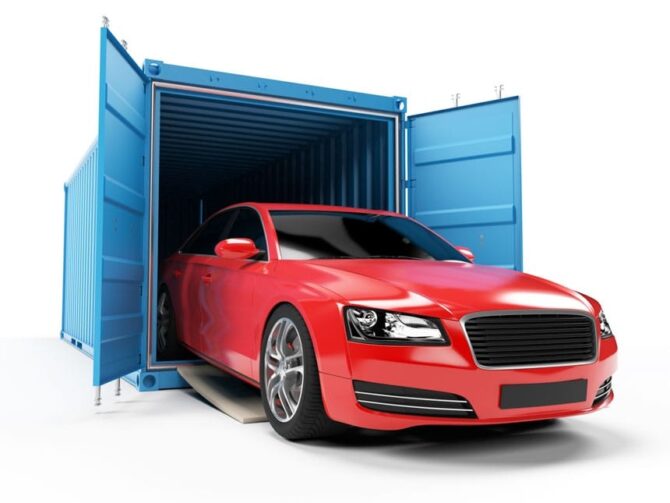
Source: coleintl.com
Bringing a vehicle from another country into Canada involves a process administered by the Canada Border Services Agency and the Registrar of Imported Vehicles.
Not all foreign vehicles are admissible — Canada has specific safety and emissions standards, and vehicles must meet those standards or be brought into compliance before they can be registered.
Vehicles from the United States tend to have the most straightforward import path because Canadian and American standards are closely aligned.
Most US-spec vehicles manufactured in the past few years are admissible with minimal modification. Vehicles from other countries face a more variable compliance landscape, and the cost of bringing a vehicle into compliance can in some cases exceed the vehicle’s value.
The RIV program administers the compliance inspection process for imported vehicles. Once a vehicle clears customs at the border, owners typically have 45 days to have it inspected at an RIV-authorized facility and any required modifications completed.
After that, provincial registration can proceed.
The timeline is manageable if the steps are initiated promptly, but delays in any stage compound and can leave the owner without a legally registered vehicle for longer than expected.
Shipping an Imported Vehicle from the Border to Your Destination
Vehicles imported by sea container or through a formal international freight process arrive at a port of entry — Halifax, Vancouver, Montreal, and Toronto are the most common for personal vehicle imports. From there, the vehicle needs to get to wherever the owner is living, which may be hundreds or thousands of kilometres away.
This is a domestic transport question, and it is handled the same way as any other vehicle shipment within Canada. The vehicle comes off the container or clears customs at the port, and a carrier picks it up and moves it to the destination city.
The owner does not need to be at the port to coordinate this. A shipping broker or the import logistics company handling the container can arrange carrier pickup directly from the port facility.
Lead time on this leg of the journey matters because port storage fees accumulate quickly. Container yards and customs release facilities are not long-term parking lots, and delays in arranging onward transport from the port can result in daily fees that add meaningfully to the import cost.
Having the domestic carrier booking in place before the vehicle arrives at port is the most cost-effective approach. Cross border car shipping logistics between the US and Canada follow a parallel process for newcomers whose vehicles are coming from the United States specifically.
Buying a Vehicle in Canada as a Newcomer

Source: torontokia.com
Many newcomers choose to purchase a vehicle in Canada rather than import one. This avoids the compliance process entirely and provides a vehicle that is already registered in the province of purchase. The practical challenge arises when the purchase happens in a different city from where the newcomer is settling.
This is more common than it sounds. A newcomer landing in Toronto may have family contacts in Calgary who help them identify and purchase a vehicle locally before the newcomer has had time to search their own city.
Or a used vehicle in a specific configuration that meets the buyer’s needs simply exists in one province while the buyer is establishing themselves in another.
The domestic transport process for a newcomer buying out of province is identical to what any Canadian buyer would face. The vehicle is picked up from the seller’s location and delivered to the buyer’s address. Documentation requirements — proof of purchase, valid insurance, registration — apply the same way regardless of the buyer’s immigration status.
Where newcomers sometimes encounter friction is in the insurance step, as some insurers require a Canadian driving record before issuing a policy.
An international driving permit combined with a foreign licence can bridge that gap in most provinces for a limited period while the newcomer establishes local driving history.
Car shipping across Canada for a purchase made in another province is a routine service on every major corridor.
Provincial Registration for Newcomers
Registering a vehicle as a newcomer involves the same provincial process as for any resident, with the additional step of establishing identity and residency documentation that recent arrivals may still be assembling.
A study permit, work permit, or permanent resident card typically satisfies the residency requirement at a provincial motor vehicles office, but the specific documents accepted vary by province.
Some provinces require a local address to issue plates, which means the vehicle cannot be registered until the newcomer has confirmed accommodation.
For people still in temporary housing while searching for a permanent address, this can create a brief gap where the vehicle exists but cannot yet be plated in the new province.
Understanding this sequence in advance — rather than discovering it on the day of the registration appointment — saves a wasted trip and the frustration of an avoidable delay.
International students are a specific case worth noting. A vehicle registered in a home country and brought to Canada for the duration of a study program may be permitted to operate on the original foreign registration for a period, depending on the province and the student’s status.
This is worth confirming with the provincial licensing authority before assuming local registration is immediately required.
Getting a Vehicle to a University or College City

Source: collegexpress.com
International students who arrive in Canada with or acquire a vehicle face the same campus city considerations as domestic students — parking availability, transit quality, and whether a car genuinely improves daily life in that particular city. Those considerations do not change based on immigration status.
What does change is the unfamiliarity of the logistics. A domestic student who has grown up in Canada has at least a general sense of how provincial registration works and what car insurance involves. An international student may be navigating all of it simultaneously while also settling into a new academic environment in a new country.
Keeping the transport logistics simple is worth prioritizing in this context. Door-to-door service that delivers the vehicle to the campus address or nearby accommodation eliminates the need to find and travel to a terminal in an unfamiliar city.
Auto transport booked with a clear pickup and delivery address removes one layer of complexity from what is already a demanding transition.
Building a Canadian Driving Record
Insurance costs for newcomers are often higher than for established Canadian residents because insurers base premiums partly on local driving history.
A newcomer with twenty years of clean driving experience abroad may pay rates closer to a new driver in Canada because that foreign history is not verifiable through Canadian systems.
Some insurers accept foreign driving records as partial credit toward Canadian experience, particularly from countries with reciprocal recognition agreements.
Shopping for insurance as a newcomer takes more time than for someone with an established Canadian record, and getting multiple quotes from insurers experienced with newcomer policies is worth the effort in the first year.
Confirm that valid insurance is in place before the vehicle ships and that the policy covers the transit period specifically.
Frequently Asked QuestionsCan I ship a vehicle to Canada before I have a permanent address?
A delivery address is required for door-to-door transport. If your permanent address is not yet confirmed, a trusted contact’s address, a temporary accommodation address, or a terminal-to-terminal option in the destination city can serve as an interim solution while housing is finalized.
Do I need a Canadian licence to receive a vehicle delivery?
You do not need a Canadian licence to accept delivery of a vehicle. You do need valid insurance covering the vehicle, which in most provinces can be obtained on a foreign licence for a defined period. Confirm the specific requirements with your provincial licensing authority and insurer.
How long does domestic vehicle transport take within Canada?
Transit times on major Canadian corridors typically range from seven to fourteen days depending on origin, destination, and carrier routing. Booking two to three weeks ahead of the desired pickup date provides adequate lead time on most routes.