
I remember the first time someone warned me about owning a German car.
“You’d better have deep pockets.”
It was said with the kind of confidence that only comes from someone who’d never actually owned one.
Years later, after several German vehicles, I’ve realized something. Most of the horror stories people tell aren’t really about the cars. They’re about maintenance that got postponed until it couldn’t be postponed anymore. That’s true of almost any vehicle, but it seems to follow Audi around more than most brands. Audi builds cars that feel incredibly refined. Doors close with a reassuring thud. The steering has weight to it. The cabins stay quiet even after years on the road. You can drive one for months without thinking much about what’s happening under the hood because everything feels so composed.
That’s part of what makes them so easy to neglect. Nothing feels urgent until one day something does.
The owners I know who have gotten the most out of their Audis aren’t necessarily the ones who spent the most money. They simply got into the habit of paying attention before the dashboard demanded it. They noticed when the engine felt a little different. They looked into small coolant leaks before they became big ones. They found a shop that knew these cars inside and out and stuck with them.
That approach usually ends up being cheaper anyway.
If you’re planning on keeping your Audi for a long time, these are the services I’d pay attention to.
1. Oil Service Isn’t Boring Once You’ve Paid for an Engine
Source: euromotiveperformance.com
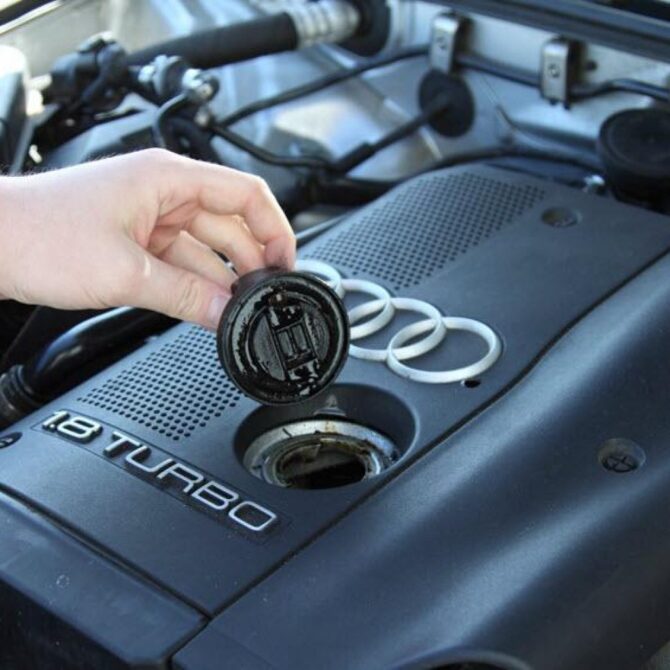
Nobody likes spending money on an oil change. It isn’t exciting. You don’t leave the shop feeling like you’ve upgraded anything. There’s nothing to post pictures of afterward. It’s maintenance in the least glamorous sense of the word.
Funny enough, it’s also the appointment that protects almost everything else.
Modern Audi engines ask a lot from their oil. Turbochargers create tremendous heat. Internal components operate with incredibly tight tolerances. Camshaft adjusters, timing components, bearings, and countless moving parts all rely on oil that stays clean and continues flowing exactly where it needs to go.
That’s why I cringe a little when I hear someone say, “Oil is oil.”
I’ve heard that from people who would never put regular gasoline into a premium-only engine.
Audi didn’t publish oil specifications because someone in a marketing department wanted another number to print in the owner’s manual. Engineers spend years testing lubricants under heat, pressure, cold starts, extended highway driving, short trips, and every miserable condition owners eventually put these cars through. Those specifications exist because different oils behave differently once an engine starts piling on miles.
Driving habits matter more than people think, too. A friend of mine drives nearly sixty highway miles every weekday. His engine reaches operating temperature, stays there, and spends most of its life cruising comfortably. Another friend works from home and rarely drives farther than the grocery store. They own similar Audis, but I wouldn’t expect those engines to age the same way.
Cars remember how they’re driven.
That sounds strange until you’ve spent enough time around them.
Some vehicles spend years warming up completely every morning before settling into an easy commute. Others are started, driven three miles, parked, cooled off, and repeated several times a day. Moisture hangs around longer. Condensation builds differently. Oil lives a much harder life.
Nobody notices any of this while it’s happening.
An oil service isn’t solving a problem that’s already there. It’s quietly preventing dozens of problems you’ll hopefully never meet.
2. Carbon Buildup Has Earned Its Reputation
Source: reddit.com
Every Audi owner eventually hears about carbon buildup.
Usually it happens online.
You’re searching for something completely unrelated, maybe trying to figure out why your Bluetooth disconnected or which tires people recommend, and somewhere in the middle of the discussion someone casually mentions walnut blasting intake valves.
If you’re new to Audis, it sounds absurd.
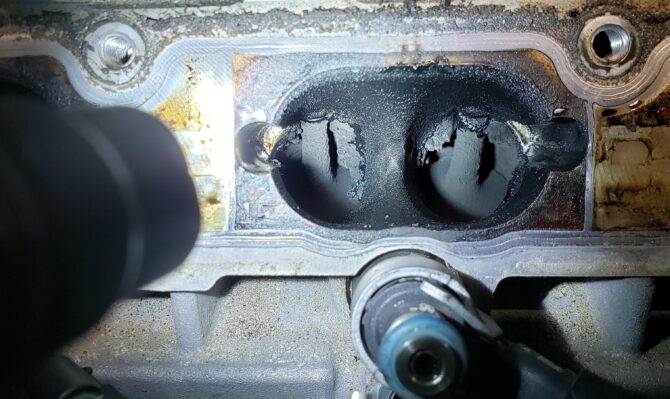
Then you learn why direct injection changed the way engines work. Fuel goes directly into the combustion chamber now instead of washing across the intake valves the way older fuel systems did. Performance improved. Efficiency improved. Emissions improved.
Those intake valves, though, slowly began collecting deposits.
The word “slowly” deserves some attention because that’s the part people often misunderstand. This isn’t something that happens over one summer.
Most owners don’t wake up one morning thinking their Audi suddenly lost power. They adapt without realizing it. The throttle feels a little softer than it used to. Maybe the idle isn’t quite as smooth. Passing someone on the interstate requires a little more pedal than it did two years ago.
Nothing dramatic happens.
Then someone cleans the valves.
The number of Audi owners who’ve said, “I forgot it used to drive like this,” is probably higher than any statistic you’ll ever find.
That’s always been the interesting part to me.
These cars age gracefully enough that they often hide small changes from the people driving them every day. Carbon cleaning isn’t something every Audi will need at exactly the same mileage because driving habits are different, engine families are different, and maintenance histories are different. I simply think it’s worth knowing that gradual performance loss sometimes has a very fixable explanation.
3. Coolant Usually Gives You Plenty of Warning
I learned this lesson in a grocery store parking lot. I wasn’t stranded. There wasn’t steam pouring from under the hood. The temperature gauge looked perfectly normal.
What caught my attention was a faint sweet smell after shutting the engine off.
That’s it.
I almost ignored it because the car drove perfectly.
A week later I noticed a couple dried pink spots near the front of the engine. They were easy to miss unless you happened to be looking while adding windshield washer fluid.
The repair ended up being relatively straightforward.
I’ve wondered more than once what would’ve happened if I’d ignored it for another six months.
That’s probably why I pay attention anytime someone mentions they’re adding coolant every few weeks.
Modern cooling systems don’t always fail dramatically.
Sometimes they simply start leaving little clues.
A hose connection develops a tiny seep. A water pump begins wearing internally. Plastic components spend years expanding and contracting through thousands of heating and cooling cycles before finally deciding they’ve had enough.
One clue rarely tells you much.
Several clues together usually tell a story.
One thing I’ve come to appreciate about experienced European repair shops is that they don’t only replace the leaking part. They spend a little time asking why that part failed and what else has aged alongside it.
Sometimes nothing else needs attention.
Sometimes finding one tired component is like pulling on a loose thread.
Either way, I’d rather have that conversation while my car is still driving normally than after a tow truck becomes part of the afternoon.
4. The Car Doesn’t Feel Different Overnight
Source: audilenox.com
One of my neighbors bought an older Audi a few years ago.
A few months later he told me he couldn’t understand why everyone raved about how well they handled.
“It feels fine,” he said.
Then he replaced most of the worn suspension components.
A week later he laughed and admitted he finally understood what everyone had been talking about.
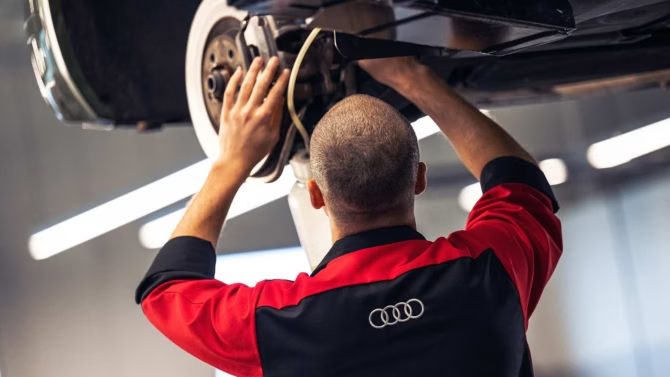
That’s suspension wear.
It’s sneaky because your brain adjusts right along with it.
Drive the same vehicle every day for five or six years and yesterday always feels normal because yesterday becomes today’s comparison.
You don’t notice yourself adding tiny steering corrections on the highway. You don’t notice the front end taking an extra bounce over expansion joints. You definitely don’t notice how gradually rubber bushings lose their firmness.
Then one day you ride in someone else’s Audi.
Or you drive your own after fresh suspension work.
That’s when the comparison comes back. The car suddenly feels tied together again. The steering responds with less effort. Corners feel composed instead of busy. Road imperfections become something the suspension absorbs instead of something the steering wheel reports back to your hands. I’ve seen people spend good money chasing ride quality with expensive tires because that’s the part they could see. Sometimes the suspension underneath had simply been asking for attention for years, and it wasn’t asking very loudly.
5. Transmission Service Always Starts an Argument
Source: cargarageexpert.com
If you want to watch Audi owners disagree with each other, bring up transmission fluid.
Someone will mention “lifetime fluid.” Someone else will say they change it every 40,000 miles without fail. Another person will jump in and explain that their transmission has 180,000 miles and has never been touched.
Everybody has a story.
I’ve never found those stories particularly helpful because none of us know exactly how another car spent its life. One Audi may have spent ten years cruising the interstate between Denver and Fort Collins. Another lived in stop-and-go traffic, saw mountain passes every weekend, and towed a small trailer a few times each summer. Those are completely different lives for a transmission.
What I do know is that fluid ages.
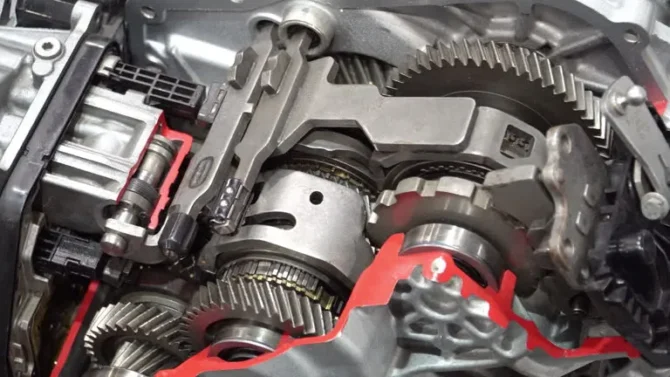
Heat changes it. Tiny amounts of wear material find their way into it. Add enough miles and it’s no longer doing the same job it did when the car rolled off the assembly line.
Transmission service isn’t something owners think about because there usually isn’t much to notice until something feels different. A slightly delayed shift. A hesitation pulling away from a stoplight. Maybe the gearbox feels less decisive than it once did.
Those changes are easy to explain away because they happen gradually.
I’d rather have fresh fluid in the transmission before I start wondering if something expensive is happening inside it.
6. Modern Audis Are Rolling Computers
Years ago, diagnosing a car could be surprisingly simple.
A rough idle pointed you in one direction. A squealing belt pointed you somewhere else.
Modern Audis still leave clues, but they’re speaking a different language.
There are sensors monitoring airflow, fuel delivery, wheel speed, suspension systems, emissions equipment, battery condition, and dozens of other systems working together every time you drive. One warning light can have several possible causes, while another problem might never trigger a warning at all.
That’s one reason guessing gets expensive.
Replacing parts because someone on a forum had a similar symptom rarely works out the way people hope it will. Two cars can behave almost identically while having completely different underlying issues.
Good diagnostics save money because they narrow the search before anyone reaches for a wrench.
I’ve always appreciated shops that spend the time finding the cause instead of chasing symptoms. Sometimes the repair itself is straightforward. Figuring out what needs repairing is the hard part.
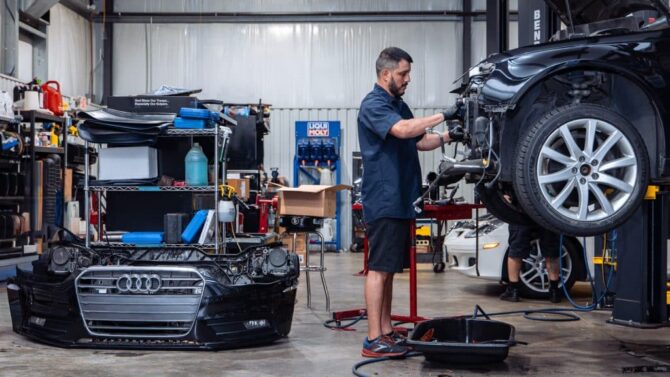
7. The Shop You Choose Shapes the Ownership Experience
Source: abrhouston.com
After enough years around German cars, I’ve become convinced that people don’t stay loyal to a repair shop because it’s the cheapest.
They stay because they trust the people working on the car. That trust usually develops in small moments.
Someone takes the time to explain why a repair matters instead of simply handing over an estimate. A technician notices another component beginning to wear and points it out without trying to sell you something that day. You leave understanding your car a little better than when you arrived.
Those experiences stick with people.
European vehicles have their own engineering quirks, their own service procedures, and their own diagnostic equipment. A shop that works on Audis every day has probably seen the issue you’re experiencing before. They know which repairs commonly appear together, which noises deserve immediate attention, and which ones can wait until the next visit.
That familiarity saves time, but it also builds confidence.
You stop wondering if every recommendation is a surprise. Maintenance becomes something you plan for instead of something that interrupts your month.
Pay attention when the car starts feeling a little different. Ask questions. Find technicians who enjoy working on these cars as much as you enjoy driving one. That’s usually enough to keep an Audi feeling like an Audi for a very long time.
If you’re looking for an Audi repair shop that specializes in European vehicles, Auto Tailor focuses on the maintenance, diagnostics, and repairs that help owners keep their cars performing the way they were designed to. Having a team that understands the platform can make ownership feel a whole lot simpler.