
If your state has refused to register your vehicle, your options are to fix the specific condition that caused the denial, apply for an exemption your state offers, or title and register the vehicle in a state whose requirements it can meet. Which option applies depends entirely on why the registration was denied.
That last part is the piece people skip. A denial for a missing title and a denial for a failed emissions test are unrelated problems with unrelated solutions, and treating them the same way wastes months. Start by getting the reason in writing.
Why do vehicles fail state registration?
Registration denials cluster into a handful of causes. Nearly every case falls into one of these.
[su_table responsive=”yes”]
| Reason for denial | What it actually means |
| Emissions test failure | The vehicle does not meet the state air quality standard |
| Safety inspection failure | A mechanical or equipment item did not pass |
| No title or defective title | Ownership is not established to the state’s satisfaction |
| VIN discrepancy | The number does not match the record or the vehicle |
| Import not federally compliant | Federal admissibility must be resolved first |
| Assembled or kit vehicle | The state has no standard record for the vehicle |
| Off-road or non-highway classification | The vehicle is not built for road use as configured |
| Salvage or rebuilt brand | The state requires inspection before reissue |
[/su_table]
Two of these are worth flagging as hard stops. A federally non-compliant import is a federal matter, not a state one, and no state filing fixes it. A VIN discrepancy has to be resolved before any registration path opens. Everything else has somewhere to go.
What should you do first after a denial?

Source: tataaig.com
Get the reason in writing
Ask the agency for the denial in written form, with the specific code or statute cited. Counter staff give verbal explanations that are often incomplete, and you cannot solve a problem you have described to yourself incorrectly.
Check whether your state has an exemption
States offer exemptions more often than owners realize. Common ones include antique or classic vehicle classifications, emissions exemptions by vehicle age, exemptions by county for vehicles registered outside a testing area, and limited-use or parade-plate registrations for vehicles driven rarely.
An exemption you already qualify for is the cheapest solution available. Check for one before pursuing anything else.
Price the fix honestly
If the denial was a failed emissions test, get a real repair quote. Sometimes the fix is a sensor. Sometimes it is a catalytic converter on a thirty-year-old vehicle that is not economically repairable. You cannot decide what to do next until you know which one you have.
Which vehicles cause the most registration trouble?
Source: 011info.com
Some categories run into state requirements repeatedly, and if yours is one of them, you are not doing anything wrong.
- Imported vehicles, especially right-hand-drive models and grey-market cars from the 1980s and 1990s
- Kit cars, replicas, and vehicles assembled from multiple donors
- Older diesel pickups in states with strict emissions programs
- Long-term project builds with engine swaps or modified drivetrains
- Vehicles bought at auction with incomplete or missing paperwork
- Trailers, campers, and equipment haulers built or heavily modified by a previous owner
The common thread is that these vehicles do not match the categories a state registration system was designed around. The system is built for factory vehicles sold through dealers, and anything outside that pattern gets flagged.
What are your realistic options after a denidal?
There are four, in rough order of cost.
Fix the condition. If the repair is economic, this is the simplest path and keeps everything in your own state.
Apply for an exemption. If your vehicle qualifies by age, use, or location, this can end the problem with a form.
Appeal or seek a waiver. Several states offer emissions waivers when documented repair spending crosses a threshold without achieving a pass. Requirements vary and the paperwork is specific.
Title and register in another state. Owners whose vehicles cannot clear their home state’s process sometimes title through a Montana LLC, which is the route this next section covers.
How does registering through a Montana LLC work?

Source: tovima.com
Montana allows a limited liability company formed in the state to hold title to a vehicle, and Montana does not require emissions testing or safety inspection for titling and registration. An owner forms a Montana LLC, the LLC takes title to the vehicle, and the title and registration are filed in Montana.
The LLC is the mechanism rather than the point. It exists because the state needs a Montana entity capable of holding the title. Service providers form the company, act as its registered agent, and handle the filings with the state.
Montana also offers permanent registration on certain vehicle categories. Legal Tags says permanent registration is automatic for boats, trailers, and motorcycles, and available for standard vehicles at least ten years old, which removes the annual renewal cycle for those vehicles.
This route is used across a wide range of vehicle categories. A breakdown of how the process differs by vehicle type is available in this reference on how to register any vehicle type through the Montana process.
What are the limits you need to understand?
This is the part that gets glossed over in a lot of marketing, and it matters more than the pitch does.
Titling a vehicle in Montana does not suspend your home state’s rules. States have their own requirements governing vehicles that are kept, garaged, and driven within their borders, and those requirements differ considerably from one state to the next. Some are permissive. Some are not.
Insurance is its own question. Your insurer needs an accurate picture of where the vehicle is kept and who drives it, and a title held by an entity changes how a policy is written. Talk to your insurer before, not after.
And this is not legal advice. It is a description of a mechanism that exists and is used. Whether it fits your circumstances depends on facts specific to you and to your state, and that is a question for someone qualified to advise you where you live. Any provider who tells you it works everywhere for everyone is telling you what you want to hear.
What is an emissions waiver and can you get one?
Source: autobodynews.com
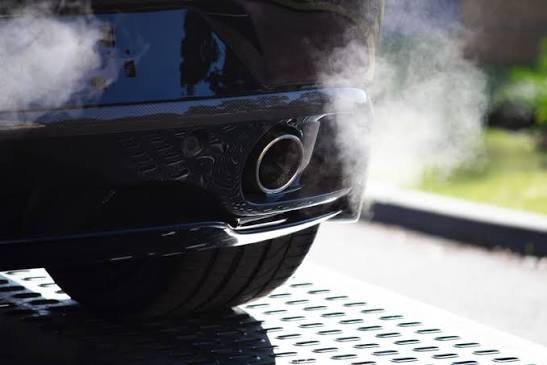
An emissions waiver allows a vehicle to be registered despite failing a required emissions test, typically after the owner documents a minimum amount of qualifying repair spending without achieving a pass. Not every state offers one, and the spending thresholds, eligible repairs, and application windows vary by state.
The rules are strict about what counts. Repairs usually have to be emissions-related, performed after the failed test, and documented with itemized invoices from a recognized repair facility. Work you did yourself in the driveway often does not qualify, and neither does a receipt for parts without labor documentation.
If your state has a waiver program and you are already spending money chasing a pass, find out the threshold before you spend more. Owners routinely spend past the waiver amount without knowing the program existed, which is a genuinely frustrating way to lose money.
How do the options compare on cost and effort?
[su_table responsive=”yes”]
| Option | Effort | Best when |
| Fix the failing condition | Varies with the repair | The repair is economic |
| Apply for a state exemption | Low, usually a form | Vehicle qualifies by age or use |
| Pursue an emissions waiver | Moderate, documentation heavy | You have already spent on repairs |
| Title through a Montana LLC | Moderate, ongoing entity | Vehicle cannot meet state requirements |
| Sell the vehicle as-is | Low | The math no longer works |
[/su_table]
That last row belongs on the list. Not every vehicle is worth registering, and a project that needs four thousand dollars of emissions work to become road legal is sometimes better sold to someone in a state that will take it as it sits. That is a legitimate outcome, not a failure.
What should you have ready before you start?

Source: dubaisouthbh.com
- The written denial from your state agency with the specific reason cited
- Whatever ownership documentation you hold, including bills of sale and prior registrations
- The full VIN or serial number, photographed in place on the vehicle
- Import documentation, if the vehicle came from outside the country
- Receipts for major components on assembled or heavily modified vehicles
- A clear account of where the vehicle will actually be kept and used
Run the VIN before you spend anything. The National Insurance Crime Bureau VINCheck lookup is free and flags vehicles reported stolen or totaled by participating insurers. Confirming the number is clean is five minutes well spent.
Frequently asked questions
[su_accordion]
[su_spoiler title=”My vehicle failed emissions. Can I register it somewhere else?” style=”fancy” class=”svetloplavi-faq”]
Registration in a state without an emissions requirement is possible, but your home state’s rules about vehicles kept and operated there still apply. Look at those rules first, because they determine whether the approach fits your situation.
[/su_spoiler]
[su_spoiler title=”What if the denial was for a missing title?” style=”fancy” class=”svetloplavi-faq”]
Then registration is the second problem, not the first. Ownership has to be established before any registration path opens, and that is a titling process.
[/su_spoiler]
[su_spoiler title=”Can I register an imported car that was never sold in the United States?” style=”fancy” class=”svetloplavi-faq”]
Federal admissibility comes first and is handled through federal agencies, not the state. Once the vehicle is legally admitted, state titling and registration become possible. The order matters.
[/su_spoiler]
[su_spoiler title=”Does a rejected registration go on my record?” style=”fancy” class=”svetloplavi-faq”]
A denial is recorded against the vehicle rather than the driver in most states. It typically stays associated with the vehicle record until the underlying issue is resolved.
[/su_spoiler]
[su_spoiler title=”How long does registering through Montana take?” style=”fancy” class=”svetloplavi-faq”]
It depends on the documentation you hold and the vehicle type. Clean cases with clear ownership documents move faster than cases where ownership has to be established first.
[/su_spoiler]
[/su_accordion]
The practical takeaway
Get the denial in writing and find out precisely what failed. Check for an exemption you already qualify for, because that is the cheapest fix available. Price the repair before assuming it is not viable. If the vehicle genuinely cannot meet your state’s requirements, titling through Montana is a real option, provided you understand your own state’s rules going in.
Legal Tags handles vehicle titling and registration for owners nationwide, including vehicles that could not be registered in their home state.